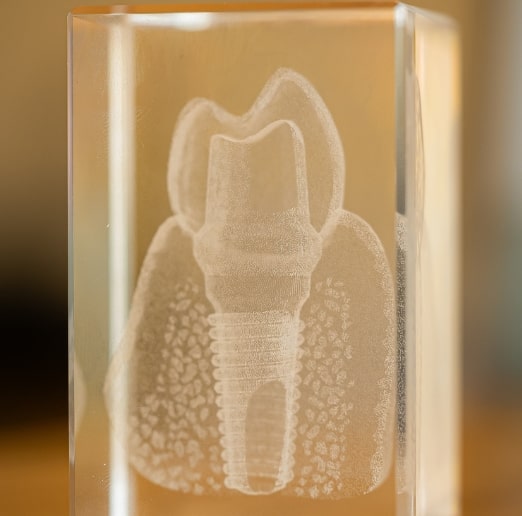
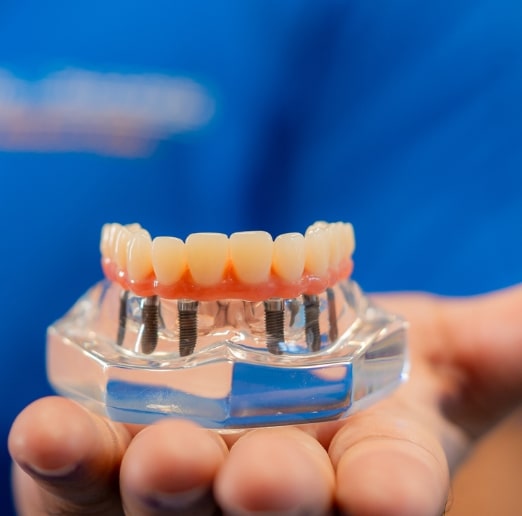
Dental implants have a success rate in the high 90 per cent range.
This depends on specific conditions in the mouth, particularly:
- Adequate bone quality and depth.
- Enough space for the implant to fit comfortably.
The good news is that, even if you initially lack sufficient bone or space, we can address these issues through bone grafting and sinus lifting, enabling successful implant placement.
In Camberley, both are common procedures that are regularly carried out by our experienced team and give hope to people who may have otherwise been told they aren’t eligible for implant-based treatment.
So let’s look at each procedure in turn…

Bone Grafting
When teeth are missing for any time, bone tissue starts to reabsorb back into the body. Studies show that as much as 50% of the alveolar (jaw) bone can be lost within the first 12 months after tooth loss. Dental bone grafting, often referred to as bone augmentation, replaces bone that is missing through tooth loss to allow dental implants to be placed.
The transfer of bone tissue can either be taken from other areas of the patient’s body (autogenous grafting), the insertion of donor bone from another human (allogenic grafting) or even the placement of a synthetic, man-made, protein-rich material. The procedure is typically conducted chairside and will be completed before any implants are placed to allow sufficient time for the area to heal.
Sinus Lifting
In Camberley, sinus lifting, also known as ‘sinus elevation’ or ‘sinus augmentation’, is an effective surgical process used to elevate the sinus cavity to allow room and safe placement for a dental implant. Typically, treatment is carried out when molars or premolars are being replaced because they are located in the vicinity of the sinus area.
Recovery After Bone Grafting/Sinus Lifting In Camberley
After a bone grafting or sinus lifting procedure, patients may expect some side effects, but any discomfort can normally be brought under control using over-the-counter medications like Paracetamol or Ibuprofen. Additionally, patients may also expect:
- Some slight swelling around the graft or sinus area.
- Tenderness at the grafting site.
- Possibly some slight bleeding.
Any discomfort or swelling should dissipate within a few days.
After 7-10 days, you will be asked to return to our Smile Success practice for a follow-up visit to check everything is okay and the graft is starting to take. At this time, any non-dissolving stitches will also be removed.
Most patients will need to wait 3-9 months until the site is healed and the bone graft has fully taken, until implants are placed. However, individual timings can be discussed with our implant dentist.
Book a Bone Grafting Or Sinus Lifting Treatment With Smile Success
If you are considering dental implants but have been told you’re ineligible because of a lack of bone, talk to the team at Smile Success about our pre-implant treatments. We can help using the latest grafting technology, so you’re one step closer to getting the smile you want.
FAQs
1. Why do patients require a sinus lift?
When bone diminishes, the air-filled cavities of the sinus membrane expand to fill the areas where the now missing bone once was. This reduces the amount of bone (and space) available to anchor a dental implant.
A sinus lifting procedure raises the floor of the sinus cavity and encourages new bone growth, making it possible to establish a solid implant-to-bone relationship.
back to Dental Implants