If you’ve recently lost a tooth through an accident or trauma, you’ll know how difficult it is to be left with a tooth gap.
At Smile Success, we provide beautiful, long-lasting, and natural solutions to replace a missing tooth with single-tooth dental implants.
A single-tooth implant and an exquisitely crafted crown restore full functionality and aesthetics to any smile and remain the gold-standard alternative to a partial denture or traditional bridge.
Want to know more? Book a smile consultation with our implant dentist here in Camberley and see if a single-tooth restoration is right for you.
Single-Tooth Implant vs Conventional Bridge
You could opt instead for a conventional bridge to plug the tooth gap, but a single-tooth implant does have significant advantages that we should discuss.
- It’s a standalone restoration – A single-tooth implant is designed as a standalone structure, meaning it doesn’t rely on nearby natural teeth for support. Therefore, unlike conventional bridges, the health of neighbouring teeth remains intact.
- Better bone preservation – When a dental implant is anchored directly into the jaw, it restimulates and preserves bone. Alternatively, some of the remaining bone will continue to diminish when you opt for a traditional bridge.
- Lasts longer – A titanium implant is designed to remain in the mouth for many years, whereas a conventional bridge will need replacing regularly.

The Implant Procedure Explained
Understandably, people are often concerned about the implant procedure, but in truth, they needn’t be. The team at Smile Success are highly trained in implant rehabilitation, and we assure patients that they are in safe and trusted hands.
The single-tooth implant process is quick and comfortable, and most patients won’t feel anything at all during the procedure. Here’s what you can expect:
- After considerable preplanning, your implant is placed into the jaw using computer-guided surgical techniques. The surgical process is quick and can be carried out under local anaesthetic, or if you’re a particularly nervous patient, light sedation.
- Once the implant is in position, it takes around 12 weeks for it to fuse with the bone.
- After the implant has fully stabilised in the jaw, your beautifully crafted crown is made.
- In the meantime, if the gap is in the visible smile line, you have the option of a temporary crown.
- Finally, after four to six months, you’ll have a fully restored smile that not only looks good but also allows you to eat the foods you love without restriction.
Fed Up With An Incomplete Smile?
If you want to replace a missing tooth or are fed up with an incomplete smile, talk to Smile Success today. Our team excels in bringing the best out of your smile.
FAQs
1. What is a single-tooth dental implant?
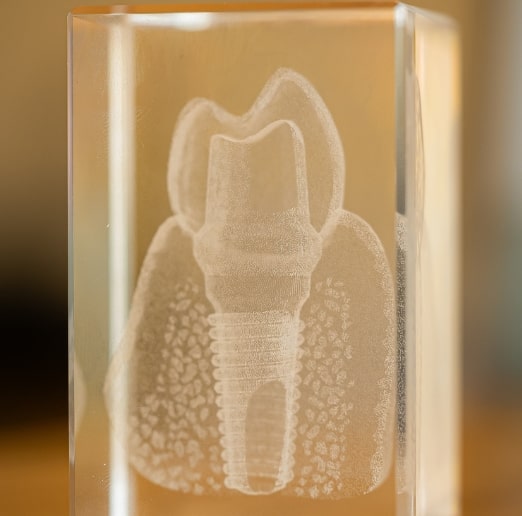
A dental implant is the nearest thing we have to replicating a missing natural tooth and is designed to fill a missing tooth gap. It consists of a titanium post which anchors down into the jawbone. Because the implant is made from biocompatible material, it physically integrates with the jawbone over time. As it does so, it forms a stable, standalone structure to which a lifelike restoration crown can be attached.
To complete an implant-based restoration, you need several different components that include:
- The implant itself is a highly engineered titanium post.
- The abutment – A connecting piece that joins the implant to the restoration tooth.
- The crown – A beautifully crafted restoration tooth made from porcelain or ceramic.
back to Dental Implants